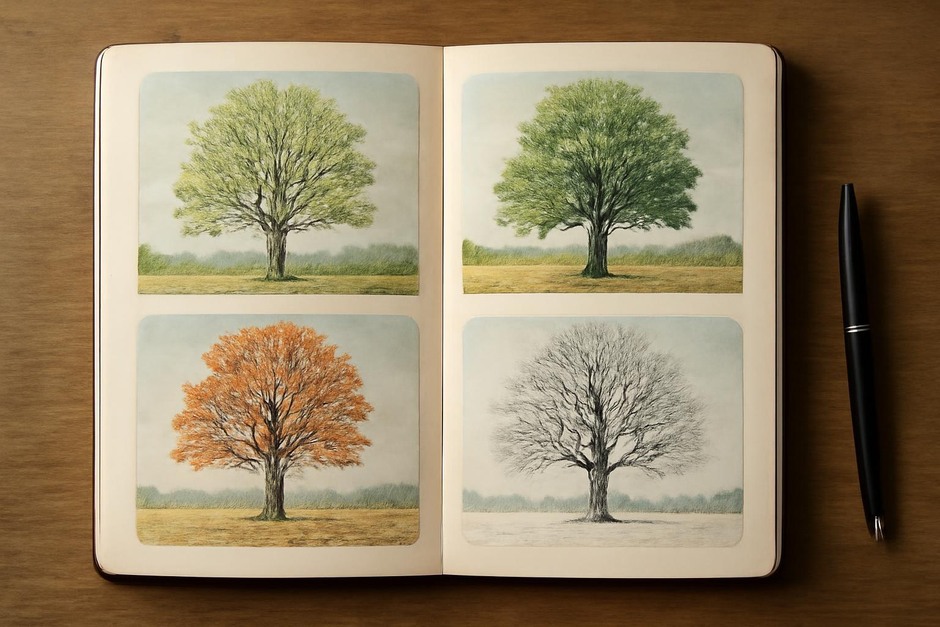
Time-Lapse Journaling: Recording Change Across Days and Seasons
Why serial recording matters
Change is often the most revealing subject outdoors. Serial studies show processes that single moments cannot: leaf emergence, color transitions, light rhythm across a year. Time-lapse journaling makes those processes legible and trains your eye to recognize gradual shifts.
Set a simple protocol
A protocol keeps the series coherent. Choose a consistent viewpoint, a reference scale, and a minimal set of data to record each session, for example date, time, weather, and an orientation note. Consistency is more important than completeness; small repeated measures build powerful comparisons.
Three approaches to serial studies
- Daily sketch cadence Short, frequent sketches that capture immediate light and weather changes. These can be 5 to 15 minute studies at roughly the same hour each day for a week to observe rapid shifts such as leafing or early blooms.
- Weekly anchor Slightly longer studies done the same day each week. Weekly records are well suited to tracking growth, insect activity, or colour transitions across months.
- Seasonal checkpoints Longer, richer studies executed monthly or at seasonal markers. Use these to record structural change like branch development, understorey succession, or soil moisture transitions.
Choosing scale and detail
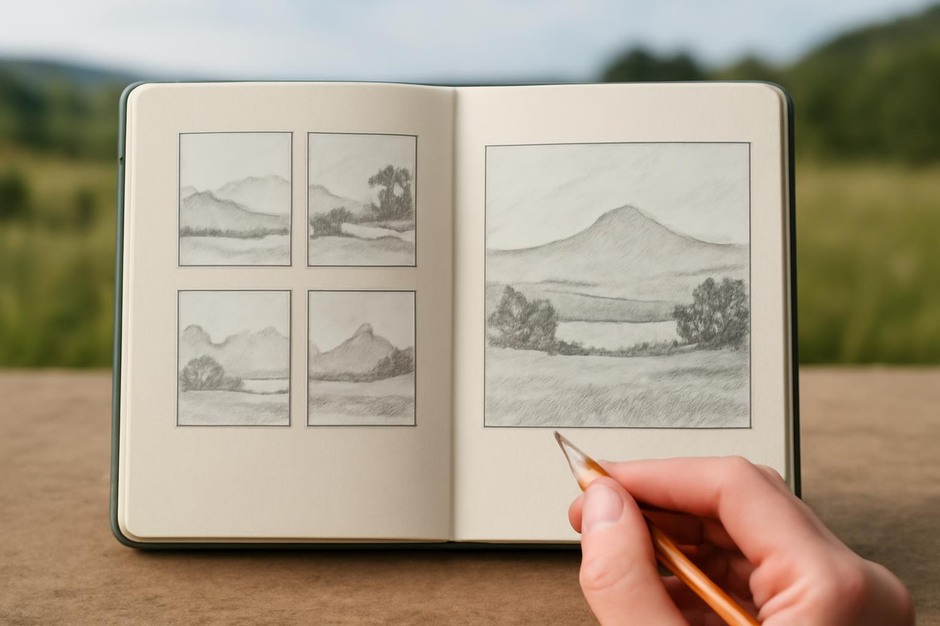
Decide whether your priority is structural change or surface detail. For structure keep a wider crop with scale cues; for phenology focus on a single branch, bud, or leaf cluster and note counts or stages. Combining scales across the same subject—thumbnails at wide scale and a tight detail—yields useful cross-references.
Recording non-visual cues
Include short sensory notes. Temperature, insect sounds, or scent can contextualize visual change and explain sudden shifts. Note anomalies such as an early frost or a prolonged heat spell; these entries become essential when interpreting colour or phenological differences later.
Assembling the time-lapse record
Organize pages chronologically with consistent labelling. Consider a visual index page with thumbnails that lets you scan change at a glance. If working digitally later, photograph each page under even lighting and assemble a sequence for side-by-side comparison.
Useful experiments
- Choose a single bud and sketch it daily until it opens, noting size and colour change.
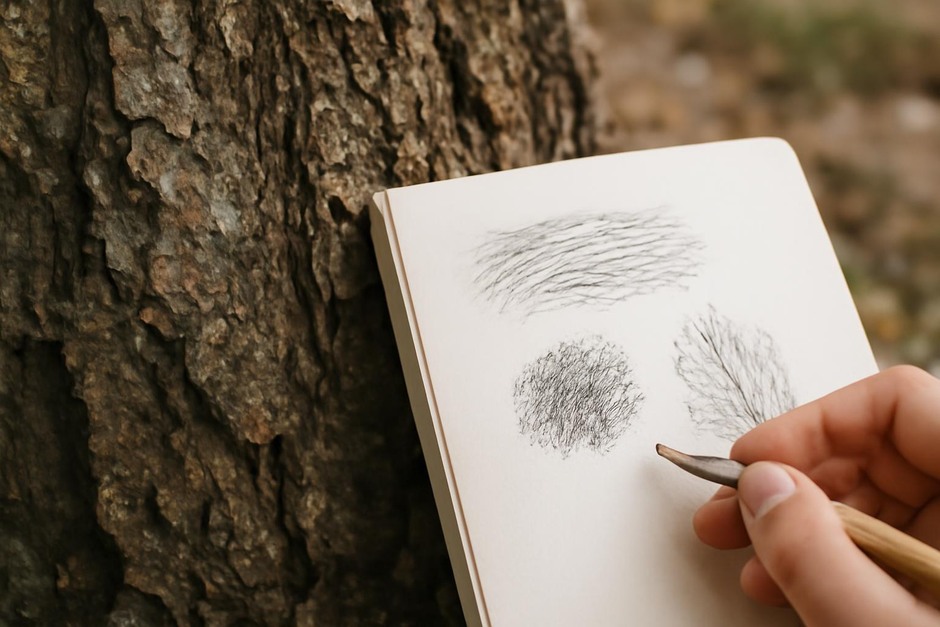
- Record a north-facing and a south-facing section of the same trunk weekly to compare moisture and lichen growth.
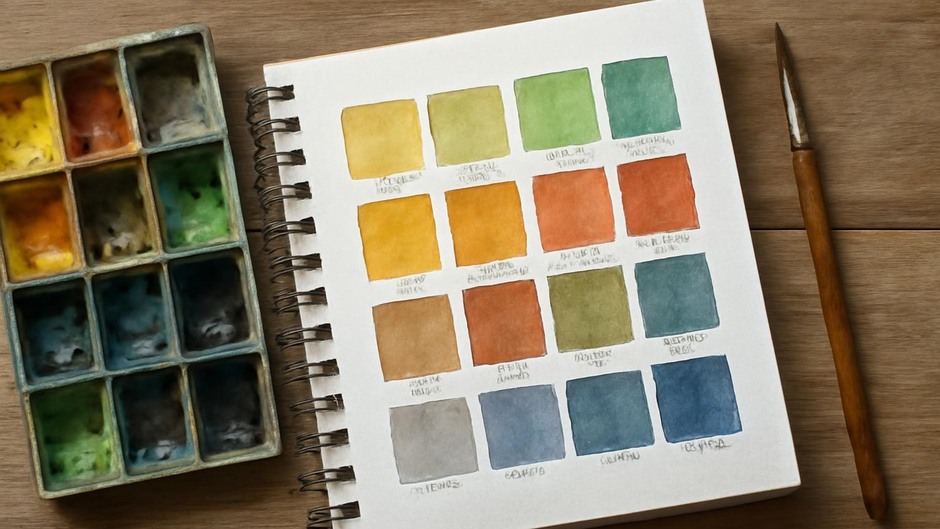
- Paint monthly colour chips from the same meadow plot to track seasonal hue shifts.
Maintain patience and curiosity
Time-lapse journaling rewards patience. Progress is often subtle, and the most valuable discoveries come from cumulative observation. Small consistent entries build both a dataset for study and a personal archive that deepens your relationship with place.